
Early career
Your first 90 days in practice: decide what needs doing first
Start with the conditions for practising, the way you organise appointments and a few colleagues you can ask for advice. Review what you learn after three months.
Geniosteo editorial team · 28 August 2026 · 4 min
Quick read
Key takeaways
- Check the conditions for practising before receiving patients; the calendar does not replace required steps.
- Allow time for notes, messages and administration alongside consultations.
- After three months, choose a few improvements from what you have actually observed.
You have finished training, but several practical questions arrive together: where to work, which insurance to arrange, how to keep records and how many appointments to offer. You do not need to settle every long-term choice immediately. You do need to know what must be in place before you start.
The three stages below are a planning suggestion. Osteopathy is regulated differently across countries. Check the rules for the place where you intend to practise; requirements do not wait until a particular month in this plan.
First month: check the essentials
Find the competent official sources for your qualification, any registration, permitted work, business formalities and premises. Ask your insurer about the activities and places you intend to cover. Keep a short list of questions, the answers received and the documents you need.
Then decide how an ordinary appointment will work: who receives the booking, where you write the consultation record, how the patient pays and how you send the invoice. Try the steps with fictional information before relying on them in a real consultation.
If you join an existing practice, ask which tasks remain yours and which the practice handles. Clarify your account, access to records, fees and the arrangements when you leave. A familiar working arrangement still benefits from clear written terms.
Second month: make room for work around appointments
Notes, messages, room preparation and invoices need time. Put these tasks in your week before offering every available hour for booking. The weekly planner lets you compare your own assumptions without entering patient data.
For example, try a short slot for routine messages and a longer weekly slot for accounts. If you repeatedly finish late, identify the task that takes more time than expected. Adjust that part of the week rather than changing everything at once.
Choose a few professional contacts you can ask about setup or everyday practice. A useful question is specific: how a colleague organises a replacement, for instance. Do not post identifiable patient information in a group, even a private one.
Third month: review what is happening
Look at concrete observations: which enquiries you receive, whether you finish on time, which admin tasks accumulate and what questions patients ask repeatedly. A few weeks of variable activity do not tell you how your whole career will unfold.
Choose two or three improvements. You might make the booking instructions clearer, move an admin slot or ask for advice on a contract. Set a time to review the result. An improvement you can check is easier to assess than a broad goal to “be more organised”.
Which decisions can wait?
You can often postpone extra tools, an elaborate website or a long software commitment until you understand your needs. Conditions for practising, appropriate insurance and the safe handling of records require attention from the start.
For a decision with lasting cost, compare the options, read the terms and ask what happens if your situation changes. Advice from another practitioner can help you frame the question; verify legal and tax rules with the relevant bodies in your country.
Take stock after three months
Keep three short lists: what works, what causes repeated difficulty and what you still need to check. Choose your next actions from those lists. Use the setup checklist for a first review, and save important documents separately because the tool clears your answers when reloaded.
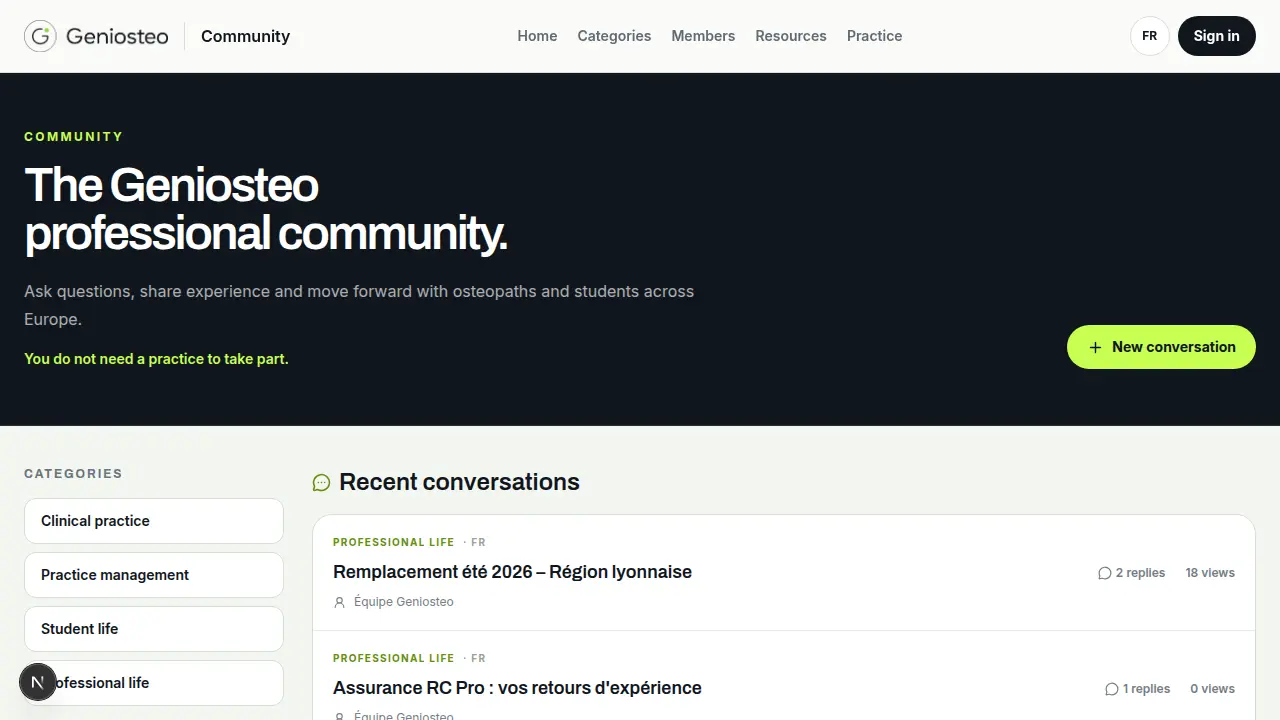
If a practical question remains, ask colleagues in the Geniosteo community. You can join without creating a practice space.
Scope of this guide
This is an editorial planning guide, reviewed on 3 October 2026. It does not state the conditions for practising, insurance or taxation in a particular country. Check those points with the competent official sources for where you work.
Discuss this article
Loading discussion…
Continue in Geniosteo
What would you like to do next?
Prepare your first practical steps
Move forward with a private, progressive checklist.
Open the toolTalk with your peers
Find discussions and experience shared by other osteopaths.
Join the communityExplore the resources
Find setup guides, articles and practical tools for your practice.
Browse resourcesUnderstand Geniosteo
See how the free account connects Community, Resources and Tools without requiring practice management.
Read the guideContinue exploring
Related articles

Plan a practice week that leaves time for more than appointments
Allow time for notes, messages, administration and breaks, then adjust the diary using what happens in your own practice.
Read
Choose practice software by trying the tasks you need it to do
Try booking, notes, billing and access controls with fictional records. Check the contract, backup recovery and data export before you commit.
Read