
Data & digital
Choose practice software by trying the tasks you need it to do
Try booking, notes, billing and access controls with fictional records. Check the contract, backup recovery and data export before you commit.
Geniosteo editorial team · 28 August 2026 · 4 min
Quick read
Key takeaways
- Try the same appointment, record and billing tasks with each supplier.
- Ask who processes the data, where, and under which written commitments.
- Check that an export can be read and reused before relying on it for a future move.
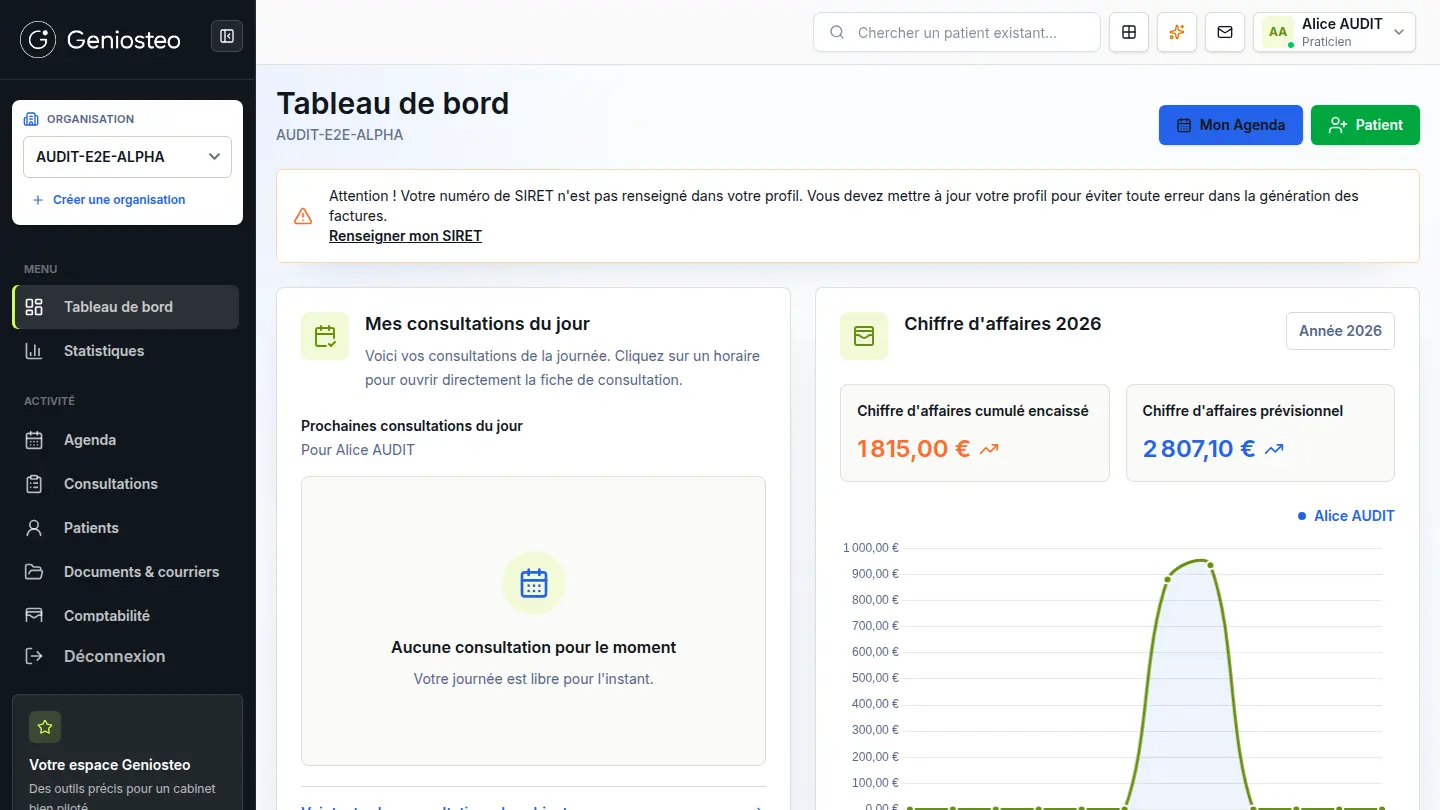
A software demonstration usually follows a prepared route. Your practice also needs to handle a changed appointment, a correction to a record and a colleague whose access has ended. Trying those ordinary situations can tell you more than a long feature list.
Begin by choosing the problems you want to solve. This guide proposes a comparison method; the legal requirements still depend on your country, professional status and the service you use.
Describe three or four everyday tasks
Write down how you book a patient, complete the consultation record, issue an invoice and answer a request for information. Add any task that regularly causes difficulty, such as arranging temporary cover.
Try the same tasks with each supplier, using fictional people and records. Include corrections: move the appointment, add a document or cancel an invoice. Note what takes several steps and what you would need to learn.
Understand who is responsible for the data
The General Data Protection Regulation, or GDPR, distinguishes the controller, who decides why and how personal data is used, from the processor, who handles it on the controller’s instructions. A supplier may also use other processors, for example to host the service.
The European Data Protection Board explains that these relationships require binding contractual terms. Ask for the supplier’s processing terms, the providers it uses, where the data is handled, how incidents are reported and what happens at the end of the contract. A general claim that a service is “GDPR compliant” does not answer those questions.
Try the access settings
Give each fictional user a role: practitioner, receptionist or temporary colleague, as appropriate. Check whether each can see only the information needed for their work. Then remove the temporary account’s access and try to sign in again.
Ask how the service protects sign-ins and records important access or changes. A named account helps identify who performed an action. The checks should suit the sensitivity of the information; ask the supplier to explain them in terms you can understand.
Ask how work resumes after a failure
A backup is a saved copy of data. Restoration means recovering that copy so you can use the records again. Ask when restoration was last tested, how much work could be lost and how long recovery might take. These are different questions from how often a backup runs.
The GDPR calls for security appropriate to the risk. There is no single feature that guarantees it. Look for documented measures, evidence of testing and a clear way to contact the supplier when something goes wrong.
Try getting your data back
Export the fictional records, documents, appointments and invoices. Check that files open, documents remain linked to the right record and the contents can be understood outside the software. PDFs may be useful to read without being enough to import into another service.
Ask which formats, deadlines, costs and assistance the contract provides. Contractual arrangements for leaving a service are broader than the GDPR right to portability: that right belongs to the individual and applies under particular conditions. Do not assume it covers a complete practice migration.
Compare what you could verify
Use the software comparison grid to distinguish a supplier’s statement, a written document and a task you actually tried. Keep the supporting documents outside the tool: your answers are cleared when you reload it.
A high total should not hide an essential unresolved problem. Before choosing, ask whether the service solves your everyday difficulties, whether the commitments are clear and whether you can recover your data.
Sources and scope
- European Data Protection Board: controllers and processors
- European Data Protection Board: securing personal data
Sources consulted on 3 October 2026. This comparison does not certify a supplier or establish the rules for an individual practice.
Discuss this article
Loading discussion…
Continue in Geniosteo
What would you like to do next?
Compare evidence, not promises
Use the private software evaluation scorecard.
Open the toolTalk with your peers
Find discussions and experience shared by other osteopaths.
Join the communityExplore the resources
Find setup guides, articles and practical tools for your practice.
Browse resourcesUnderstand Geniosteo
See how the free account connects Community, Resources and Tools without requiring practice management.
Read the guideContinue exploring
Related articles

Plan a practice week that leaves time for more than appointments
Allow time for notes, messages, administration and breaks, then adjust the diary using what happens in your own practice.
Read
Your first 90 days in practice: decide what needs doing first
Start with the conditions for practising, the way you organise appointments and a few colleagues you can ask for advice. Review what you learn after three months.
Read